Showing posts with label vislang. Show all posts

Sunday, December 5, 2010

poverty design problem: final process


We (Vi and I) had our garden idea, and that was a bit too complex and didn't relate directly to the poverty simulation and was therefore problematic.

_______
_______
We then had the idea of taking the scenario of MO who was ripped off by not getting a reciept at the mortgage place during the poverty simulation.

So we thought we might make a poster where we would tell out target audience (low income people) how they might be screwed - and show them ways to avoid that.
using a different tagline, we tried different messages with different imagery. this message was pointing out that some people can get robbed.... and these things affect family etc. we didn't go this direction.

______

We then got ahold of our new idea, and developed it from here:

___
___
THESE OUR OUR 3 messages that we ended up going with:


_____
_____
We continued to refine our color pallete, add imagery to the compositions, and refine the messages.


___
___

We ended up splitting these three messages into 3 different channels.
the first (yellow) is a poster that can be strategically placed at a location that might rip you off, and the next is a poster and plackard that are located on the bus and at the bus stop, and the third is a motion piece that can be seen on screen on television which ideally would be located in a waiting room of where our target audience would be.


This is our final in context shot of our bus plackard:

This is our incontext shot of the poster.


this is a still with the fact from our motion piece: we ended up changing the color on the final motion piece to green tough. which is shown above (in green).
_____
_____

Here is our final color pallete:


.

PROCESS BLOG

Vi and I started the project with our schematics that genearally followed the model of our own schematics. This model addresses more specifically some issues that were expereinced in the Poverty Simulation that was held in Eperson Auditorium. Here are different iterations as we


Then we ended up with our final iteration and included that into our presentation:\

and here's a detail. for the prestentation, we strategically zoomed in to talk about the specific things that we needed to.


Tuesday, November 23, 2010

Reading response

I DO DECLARE: (link)

This was definitely helpful I'd say.

I'ts important to be able to make good presentations. One would expect that designers would be good at that, but apparently they aren't for the most part. 'Designers should arouse the audience, not merely incite'.

The different guidlines are helfpul in making the experience more engaging for the audience:

.showing a 'map' of what you're going to talk about – a thesis statement.
.utilize your strengths - play down your weaknesses. (i.e. if you don't talk much, use visuals).
.keep the audience guessing.
.incorperate different ways of speaking.
.edit. use critical insight.
.use humor when possible and appropriate.
.don't let the audience be stuck in the same thought for too long.
.speak rather than read. or if you read, don't let it be evident. - let the audience read aswell. That is another way to engage.
.make it obvious when the end is going to be.

__________
BE SELFISH (link)


In Response to the Readings

.Sketches and Prototypes: (link)

The reading makes abundantly clear that a sketch is something different than a prototype. A sketch is something that is freehanded and whimsical and does not require any commitment. A prototype is similar in a way, though quite different. A prototype is further along in the development of the creative process. With a prototype, you are still free to explore, yet at that point in the process, you will have (after making sketches) made some commitments toward certain ideas.
You use a sketch to think of a loose idea – it is something that is affordable in both time and materials. The prototype is an affordable way of demonstrating how a project will finally turn out – it should allow you the freedom for some minor change, but mostly just refinements.


________

Monday, November 22, 2010

Thursday, November 4, 2010

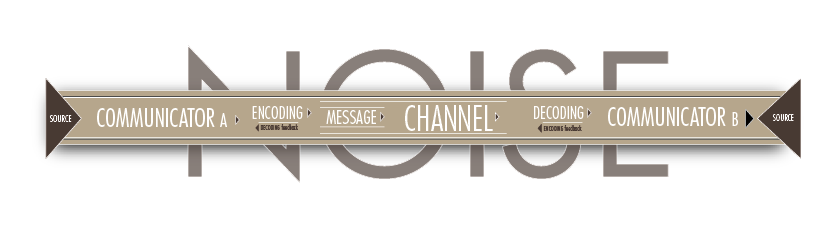
FINAL SCHEMATIC visual communication theory


and finally:


____________

further refinement:


schematic PROGRESS

The following are rough draft schematics that were either too specific, or did not have very good formal qualities. However, I took elements from some of these and used them in the final.


Sunday, October 31, 2010