Friday, October 29, 2010

evolution of one process:

Here is a good example of how one idea evolved throughout this project:


I started with the initial thumbnail sketches. The more variations the better.


Then I started playing around with rendering styles:
I mostly played around with the blueberry stains. I did something very similar to the taxonomy project and ended up making lots and LOTS of marks that I would then select from, scan in and photoshop.


and from that I got these things after multiplying layers together in photoshop:


SOON I ENDED UP WITH what I call my berry burst:
for this I cut a whole in a piece of paper, then used that as a mask (see above) for scrubbing the skin of the blueberry onto paper under that. on the mask itself I got a cool border, and that is how I got what you see here:


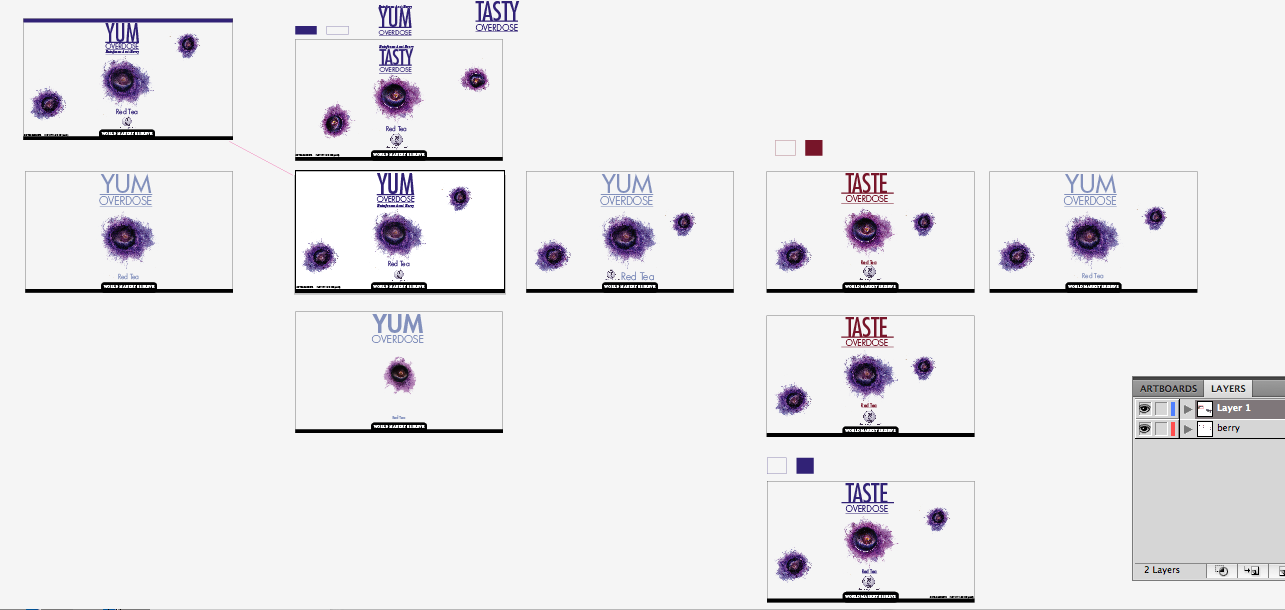
SO composition wise and concept wise I ended up with this process of development:


___________________

AND here are interesting parts of other similar processes that I worked on simultaneously when doing iterations of the other modes of appeal:


Wednesday, October 27, 2010

Friday, October 22, 2010

PRO 2 FIND AND SHARE

Here is a very simple yet I think effective example of pathos:

And this one has Ethos written all over it:


And I'd be hard pressed to find a better example of LOGOS:
It shows you the percentage of the ingredients in the energy drink.


Tuesday, October 12, 2010

PROCES

PRO 3 PROCES 1:

2 BASIC CONCEPTS:

A: USING THE GRID AND SETUP OF THE TECHNICAL DRAWINGS (HOUSE PLANS) TO INFORM THE GRID OF THE BOOK LAYOUT:


B:USING BASIC SHAPES OF ARCHITECTURE TO INFORM THE IMAGE:


I WENT WITH B:
HERE IS TEXT DOMINANT SPREAD:

HERE IS IMAGE DOMINANT SPREAD:


Sunday, October 10, 2010

Friday, October 8, 2010

MIKE McCOY: presentation.

Mike McCoy is in industrial designer and has been so for a considerable number of years. He says that designers are generally stressing the importance of creativity in package design. Design should not only be practical and understandable, it should also (when possible) be innovative and should have meaningful content.

He separates the two ideas of people centered design, and consumerist design (airport, or large corperation type stuff). Naturally for those two different audiences, you have two different approaches. where the consumerist design products are inherently more generic, the people centered design is free to be much more specific, and creative.

He gave many examples of how you might approach coming up with the concepts of a design. That was in his checklist. he focuses on Interaction, objects and users.